
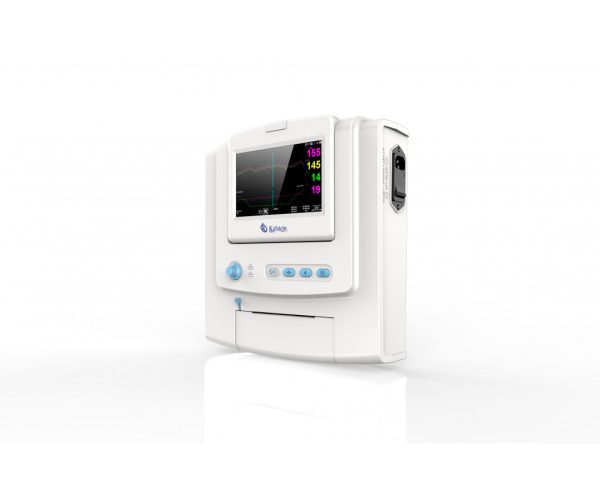
A vital signs monitor is a device that allows you to detect, process and continuously display the physiological parameters of the patient. It also has an alarm system that alerts when there is an adverse situation or outside the desired limits.
In other words, we can say that multiparameter monitors are responsible for collecting, displaying and storing all the patient’s vital signs. These teams work differently for each vital sign. For example, to measure the heart rate, it picks up the electrical activity of the heart by means of electrodes and amplifies it. To measure the respiratory rate, it collects and amplifies the respiratory movements of the chest. To determine the amount of oxygen the patient does through his pulse.
All these parameters are shown separately on the vital signs monitor. In the event that any of them is below or above normal for the patient’s age, or any other adverse activity is generated, an alarm is activated to notify medical professionals.
These alarms are visual and audible, although they can be silenced easily if you are trying to solve the problem that has generated them.
Vital signs are monitored especially in patients undergoing anesthesia, medication or any other treatment that determines the need for blood, variation in medication or volume replacement, such as a plasma expander.
What are the vital signs that monitor these teams?
There are five basic parameters that record and show today’s vital signs monitors:
- Electrocardiogram (ECG): electrodes are placed on the patient’s body that are responsible for recording and amplifying the electrical impulses of the heart.
- Respiration (RESP): controls the respiratory rate by measuring the thoracic impedance thanks to two of the electrodes used in the ECG.
- Temperature (TEMP): using a thermometer, it also shows the temperature the patient has at all times.
- Non-invasive pressure (NIBP): Non-invasive blood pressure is obtained using an electronic sphygmomanometer, whose bracelet is placed on the patient’s arm.
- Oxygen saturation (SpO2): A pulse oximeter is placed on the patient’s finger that emits light with two different wave densities to determine their blood oxygen level.
Other parameters that can be registered in more advanced models are:
- Invasive pressure (PI): By means of a sensitive catheter inserted into a patient’s artery, blood pressure can be measured with greater precision than that offered by non-invasive pressure.
- Venous oxygen saturation (SvO2): a catheter is inserted into the superior vena cava to obtain greater precision when determining your blood oxygen level.
- Intracranial pressure (ICP): An intracranial catheter is introduced to the patient to measure the pressure inside the skull.
Portable vital signs monitors
They are those that can be moved from one place to another, allowing continuous monitoring of the patient in case it is necessary to transfer it to another place. Within the portable monitors we can find two types:
- Inpatient: they are used in the event that a patient has to be transferred from one area to another of the same hospital or health center. They must use a battery that allows an autonomy of at least two and a half hours.
- Interhospital: they are used in the event that a patient has to be transferred from one hospital to another. It is necessary that they have a 12V connection to connect them during the ambulance transfer.
In Kalstein we offer you an excellent monitor of vital signs designed with the highest quality. That’s why we invite you to take a look HERE