Product Description
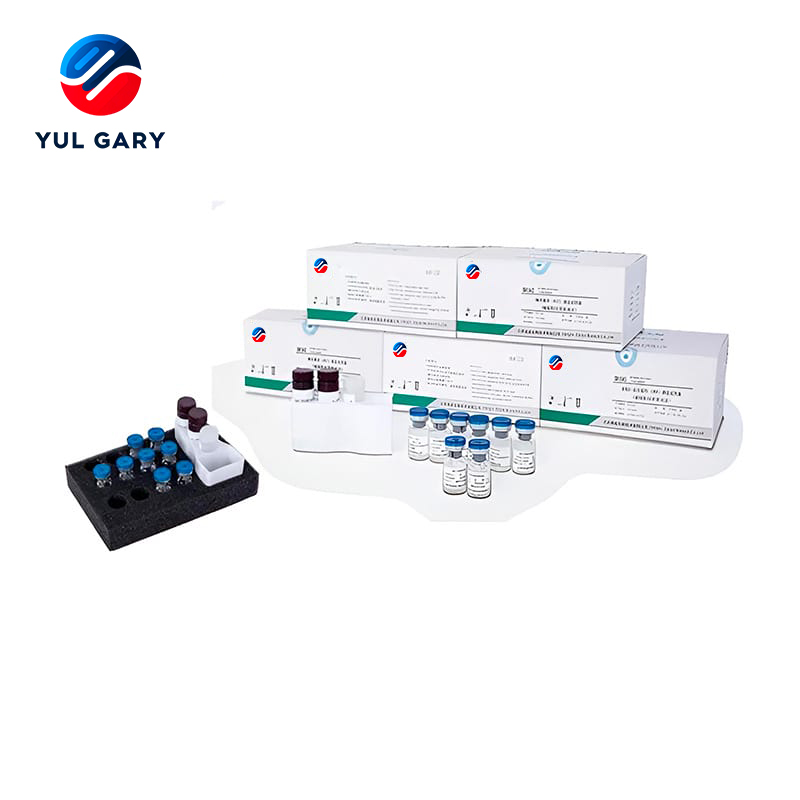
The Hepatic Fibrosis Test series, models YGA1357 to YGA1361, stands at the forefront of medical diagnostic tools, offering unparalleled precision and efficiency. This range of tests is specifically designed to target and quantify critical biomarkers associated with liver fibrosis. The specific parameters tested by each model are as follows: PIIINP for YGA1357, CIV for YGA1358, LN for YGA1359, HA for YGA1360, and CG for YGA1361. Such detailed analysis allows for a comprehensive understanding of liver health, aiding in the early detection and management of hepatic conditions.
This product employs Chemiluminescent Immunoassay (CLIA) as its analysis mode, a technique known for its high sensitivity and specificity. Packaged in convenient configurations of 50T/BOX, the platform supports additional configurations of 100T/BOX, 24T/BOX, and 48T/BOX, adaptable to varying laboratory needs. The kits are optimized for storage at temperatures between 2 to 8°C, ensuring the stability and longevity of the tests.
With certifications from CE, ISO13485, and FSC, these tests meet stringent international quality standards, providing users with the confidence of reliable results. Calibration is made simple with options for 2 or 6 points, facilitating ease of use for laboratory technicians. Explore the detailed specifications below to understand the cutting-edge technology embedded in these tests.
| Model | YGA1357 | YGA1358 | YGA1359 | YGA1360 | YGA1361 |
| Tested Parameter | PIIINP | CIV | LN | HA | CG |
| Analysis Mode | CLIA | ||||
| Package Specification | 50T/BOX, | ||||
| Platform | 100T/BOX, 24T/BOX, 48T/BOX AP(Alkaline Phosphatase) | ||||
| Storage | 2-8°C | ||||
| Calibration | 2/6 Points | ||||
| Certification | CE, ISO13485, FSC | ||||
Market Price
The market price for the Hepatic Fibrosis Test range is variable depending on the targeted parameter and the configuration of the package selected. Typically, prices can fluctuate from approximately $200 to $600 per unit, with variations attributed to quantities and specific model requirements. While this represents a premium tier investment, the superior accuracy and reliability offered by this test range justify the expenditure, ensuring high returns through dependable diagnostics.
Frequently Asked Questions
What is the storage condition for the Hepatic Fibrosis Test?
The tests should be stored at a temperature between 2-8°C to maintain optimal performance and validity.
Are these tests suitable for point-of-care settings?
While predominantly designed for laboratory use due to the CLIA analysis mode and multiple calibration options, adaptations for point-of-care settings may be possible with the right infrastructure and expertise.
What certifications do these tests carry?
The tests are certified by CE, ISO13485, and FSC, ensuring compliance with international quality and safety standards.
Advantages and Disadvantages
Advantages: The Hepatic Fibrosis Test series offers exceptional accuracy and detailed parameter-specific testing, enabling precise diagnosis and management of liver conditions. The flexibility of packaging and calibration options makes it adaptable for different laboratory environments. Additionally, international certifications affirm the reliability and quality of these tests.
Disadvantages: The primary downside may be the higher initial cost compared to simpler testing kits, which could be a barrier for smaller laboratories. Moreover, the requirement for controlled storage conditions might limit the test’s applicability in some settings without refrigeration capabilities.
Field Use of the Product
In real-world diagnostic scenarios, the Hepatic Fibrosis Test is utilized by healthcare professionals to assess liver health with precision. By identifying specific fibrosis-related biomarkers, the tests provide crucial information that can shape patient treatment plans, facilitating early intervention strategies. Laboratories benefit from the kit’s ease-of-use, with detailed instructions ensuring accurate implementation and result interpretation.
The tests are frequently part of larger diagnostic procedures where they contribute valuable data essential for a comprehensive understanding of a patient’s hepatic condition. Researchers also utilize these tests in clinical trials and studies aimed at advancing medical knowledge about liver diseases.
Recommendations
For optimal use of the Hepatic Fibrosis Test, it is recommended to adhere strictly to storage guidelines and calibration procedures outlined by the manufacturer. Regular quality control checks can ensure ongoing result integrity. Laboratories should consider integrating these tests as part of a broader suite of diagnostic tools to enhance overall disease monitoring capabilities.
Additionally, staying informed about updates in regulatory standards and participating in continuing education opportunities can enhance the effective use and integration of these tests within healthcare settings. Given their technical nature, training staff thoroughly on proper usage and result interpretation is crucial for maximizing the benefits these tests offer.
Discover the innovation and quality that Yulgary has to offer. If you are looking for high-performance laboratory equipment, you are in the right place. At Yulgary, we manufacture products with excellence standards that meet the most demanding needs. Browse our online store, designed to provide you with a fast, easy purchase experience with competitive prices. Don’t miss the opportunity to enhance your laboratory with the best in scientific technology. Click here to explore our catalog.