In the evolving world of medical technology, choosing the right equipment can make a significant difference in patient outcomes. In this article, we compare two highly regarded multi-parameter patient monitors: the YG1679//YG1680 from Yul Gary and the BeneView T1 from Mindray. Both devices are noted for their precision and reliability, but several factors differentiate them, making one better suited for specific medical environments.
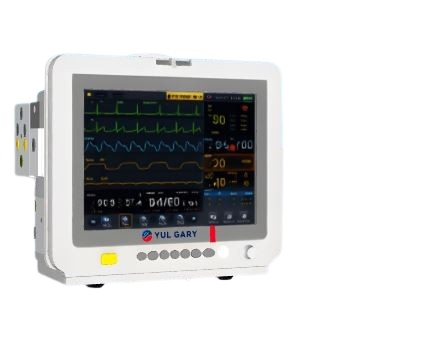
The Yul Gary Multi-parameter patient monitor YG1679//YG1680 is designed for comprehensive patient monitoring. It provides accurate readings across a variety of parameters including heart rate, blood pressure, oxygen saturation, and more. This monitor is known for its user-friendly interface and seamless integration into existing medical systems. On the other hand, the Mindray BeneView T1, while also effective, targets mobility and ease of transport, slightly compromising on some advanced monitoring features found in the Yul Gary models.
| Feature | Yul Gary YG1679//YG1680 | Mindray BeneView T1 |
|---|---|---|
| Parameters Measured | Comprehensive (HR, BP, SpO2, etc.) | Standard (HR, SpO2, etc.) |
| Display Interface | User-friendly and customizable | Basic touch interface |
| Connectivity | Seamless integration with hospital systems | Basic connectivity options |
| Portability | Stationary with optional mobile stand | Highly portable |
| Price Range | Moderate | Less expensive |
How They Work
The Yul Gary YG1679//YG1680 operates with advanced algorithms to ensure precise readings across multiple parameters. Its interface allows medical professionals to customize setting alarms and displays to fit specific patient needs. It integrates effortlessly into hospital networks, enabling centralized monitoring and data analysis.
Meanwhile, the Mindray BeneView T1 is a compact design ideal for situations where mobility is necessary. It includes basic monitoring capabilities with high portability, but it does not match the comprehensive parameter coverage of the Yul Gary model. The T1 is simple to set up and operates as a plug-and-play unit.
Purpose
The YG1679//YG1680 is tailored towards environments requiring simultaneous monitoring of multiple patient parameters. It’s an ideal choice for ICUs, surgical units, and emergency care due to its extensive reading capabilities and customizable features.
The BeneView T1 thrives in situations demanding portability, such as ambulance services or temporary medical facilities. It offers essential monitoring capabilities in a compact, transport-friendly format, making it suitable for non-stationary healthcare environments.
Types
The Yul Gary product line offers variations that cater to specific monitoring needs, possibly including pediatric or high-risk pregnancy models. Similarly, Mindray’s BeneView series likely includes other models designed for intensive care or specialty ward applications.
Market Prices
The Yul Gary YG1679//YG1680 falls within a moderate price range, reflecting its extensive capabilities and integration options. The Mindray BeneView T1, although less comprehensive, is more budget-friendly, catering to settings where primary monitoring suffices.
Frequently Asked Questions
What are the main differences between the YG1679//YG1680 and BeneView T1?
The Yul Gary model offers more extensive monitoring with advanced integration, while the BeneView T1 focuses on portability with basic monitoring features.
Are these monitors compatible with other medical equipment?
Both models offer connectivity options, but the Yul Gary monitor excels in seamless integration with hospital networks, providing superior compatibility.
How portable is the Yul Gary YG1679//YG1680?
While primarily designed for stationary use, the Yul Gary monitor can be equipped with a mobile stand for flexibility within a hospital setting.
Advantages and Disadvantages
YG1679//YG1680 Advantages: Comprehensive monitoring capabilities, user-friendly interface, robust hospital integration. Disadvantages: Less portable compared to highly mobile units.
BeneView T1 Advantages: High portability, cost-effective for essential monitoring. Disadvantages: Limited advanced features compared to more sophisticated monitors.
Application in the Field
The Yul Gary YG1679//YG1680 is extensively used in critical care environments where patient parameters must be closely monitored. Its ability to integrate with existing systems makes it valuable in hospital networks.
Mindray’s BeneView T1 finds usage in scenarios where mobility is crucial, such as emergency medical services, providing necessary functionality in compact situations.
Recommendations
For healthcare facilities requiring advanced monitoring capabilities, the YG1679//YG1680 from Yul Gary is recommended. It is advisable to ensure proper integration with existing systems for maximized utility. Regular calibration and staff training can enhance its operational efficiency.
For emergency services requiring high transportability, Mindray’s BeneView T1 is ideal. Ensure batteries are charged and spares available to prevent downtime during transport.
If you are looking for a fusion of innovation and quality, you have come to the right place. At Yul Gary, we offer you the luxury of exploring our exclusive laboratory equipment catalog. We manufacture each piece of equipment with excellence. Don’t hesitate any longer; we bring science to life—it’s time to join our community. https://yulgary.no/product/multi-parameter-patient-monitor-yg1679-yg1680/.