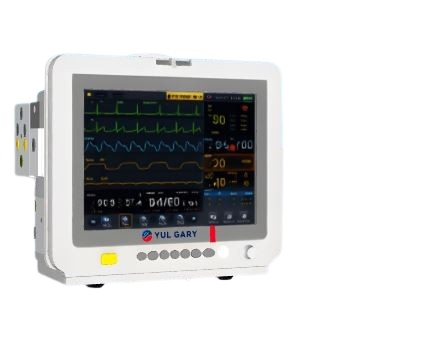
When monitoring vital signs is crucial in medical settings, investing in reliable multi-parameter patient monitors becomes a priority. Today, we delve into the specifics of the Multi-parameter Patient Monitor YG1679 // YG1680 by Yul Gary and compare it against the BeneVision N22/N19 from Mindray. Both products offer unique features and benefits, catering to the diverse needs within healthcare facilities.
The Multi-parameter Patient Monitor YG1679 // YG1680 by Yul Gary is designed for efficient monitoring of vital physiological parameters. It stands out with its sophisticated yet user-friendly interface, making it an appealing option for healthcare providers. Meanwhile, Mindray’s BeneVision N22/N19 is recognized for its advanced connectivity and high-definition touchscreens, providing seamless integration into hospital networks.
| Feature | Yul Gary YG1679 // YG1680 | Mindray BeneVision N22/N19 |
|---|---|---|
| Display | 12.1-inch LED Screen | 21.5-inch/18.5-inch HD Touchscreen |
| Parameters Monitored | HR, BP, SpO2, Temp, Resp | HR, BP, SpO2, Temp, Resp, CO2 |
| Connectivity | Wi-Fi, Bluetooth | Wi-Fi, LAN |
| Battery Life | Up to 12 hours | Up to 8 hours |
| Dimensions | 320x240x90 mm | 330x250x90 mm (N22), 310x240x85 mm (N19) |
How They Work
The Yul Gary YG1679 // YG1680 operates by continuously monitoring and displaying real-time data on critical physiological parameters. With precise sensors, it ensures accuracy and reliability, providing alerts whenever values exceed normal ranges. Its wireless capabilities afford enhanced portability within the clinical environment.
In contrast, the Mindray BeneVision N22/N19 is built with cutting-edge technology to integrate seamlessly into existing hospital systems. With its high-definition touchscreen, clinicians can easily access patient data, quickly identify trends, and respond promptly to alerts. However, its dependence on wired connections can sometimes limit mobility.
What They Are For
Both monitors serve the essential function of providing round-the-clock surveillance of patients’ vital signs. The Yul Gary YG1679 // YG1680 is particularly noted for its portability, making it suitable for use in various settings within a hospital, including intensive care, surgery, and emergency departments.
The Mindray BeneVision N22/N19 is ideal for fixed installations where continuous connection to hospital networks is beneficial. Its advanced interface is designed to support deep data analysis, making it suitable for comprehensive patient care management.
Types
The Yul Gary YG1679 // YG1680 offers two main models, each tailored to specific monitoring needs, ensuring healthcare providers can select a model that best suits their protocols. Similarly, Mindray’s devices come in different configurations to accommodate diverse clinical environments, but the product focus is more on compatibility rather than modularity.
Market Price
In terms of pricing, the Yul Gary YG1679 // YG1680 offers competitive rates, typically ranging from $2,000 to $3,500 depending on the configurations and specific retailer. Mindray’s BeneVision N22/N19 is priced on the higher end, with models starting around $4,000 and can exceed $6,000, reflecting its comprehensive connectivity solutions.
Frequently Asked Questions
What parameters can the Yul Gary monitor measure?
The Yul Gary YG1679 // YG1680 monitors key parameters including heart rate, blood pressure, SpO2, temperature, and respiratory rate.
Is the Yul Gary monitor adaptable for pediatric usage?
Yes, with compatible pediatric sensors, the Yul Gary monitor can be used for pediatric patients, providing accurate readings for smaller anatomical structures.
Can the Mindray monitor be integrated with electronic medical records (EMR)?
Yes, the Mindray BeneVision N22/N19 is designed to integrate with EMR systems to facilitate the sharing and analysis of patient data.
Advantages and Disadvantages
Yul Gary YG1679 // YG1680 Advantages: Longer battery life, portability, cost-effective, user-friendly interface, reliable wireless connectivity.
Yul Gary YG1679 // YG1680 Disadvantages: Smaller screen size compared to competitors.
Mindray BeneVision N22/N19 Advantages: High-definition touchscreen, deep system integration, additional monitoring parameters.
Mindray BeneVision N22/N19 Disadvantages: Higher cost, limited mobility due to wired connections, shorter battery life.
Product Use in the Field
The Yul Gary YG1679 // YG1680 excels in dynamic environments that require frequent movement or changes in patient locations, such as emergency response or mobile clinics. Its long-lasting battery and wireless connectivity allow medical practitioners to monitor patients without interruption.
The Mindray BeneVision, while less mobile, is perfectly suited for structured environments where its integration with hospital systems and data precision can be fully leveraged, such as intensive care units or for in-depth patient monitoring.
Recommendations
For healthcare facilities requiring flexibility and cost efficiency, the Yul Gary YG1679 // YG1680 offers an excellent balance of performance and value. Regular maintenance and calibration are recommended to maximize performance. For institutions focused on comprehensive network integration and exhaustive parameter tracking, the Mindray BeneVision is a significant albeit more expensive investment.
If you are searching for a fusion of innovation and quality, you have arrived at the right place. At Yul Gary, we offer you the luxury of exploring our exclusive laboratory equipment catalog. We manufacture each piece of equipment with a level of excellence. Do not hesitate any longer, we bring science to life, it’s time to become a part of our community. https://yulgary.no/product/multi-parameter-patient-monitor-yg1679-yg1680/.